Assisted suicide is a very controversial issue and often leads to misinformation and biased responses. It can be difficult to find a graph or chart that has accurate information regarding this topic. In order to find graphs that are not highly biased or inaccurate, you have to do research and use your knowledge of what an accurate graph would include to determine if you should use the graph for informational purposes.

This is a graph about how many people have have acted upon Oregon's law that allowed medically-assisted suicide since it was passed. The first thing I noticed about this graph was the title, 'Assisted suicide deaths'. It just doesn't seem like the best title for what the graph is talking about. The x and y axis are not labeled, which can be misleading and confusing. You can infer that the x axis is about the year and that y axis is the number of individuals who acted upon the law. This graph does not seem to be too reliable.
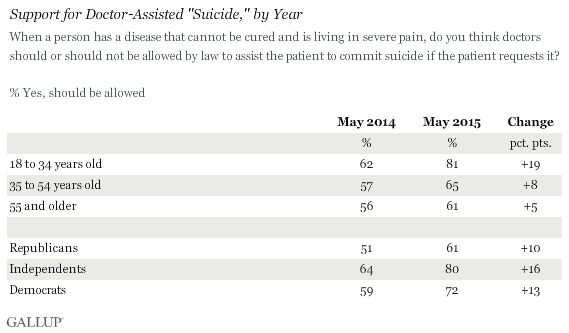
There are many graphs out there that are misleading and do not provide accurate information. You have to be diligent in making sure it comes from a reputable source and that the information shown is accurate. It can definitely be frustrating in locating the graph that actually has good information on it. There are graphs out there with good data, you just have to know where to look and what to look for in determining the accuracy of them.
